Through its Rapid Response Fund, the Michigan Health Endowment Fund awarded a $150,000 grant to Berrien Community Foundation to support families, seniors and community partners across Berrien County in accessing healthy, affordable food. 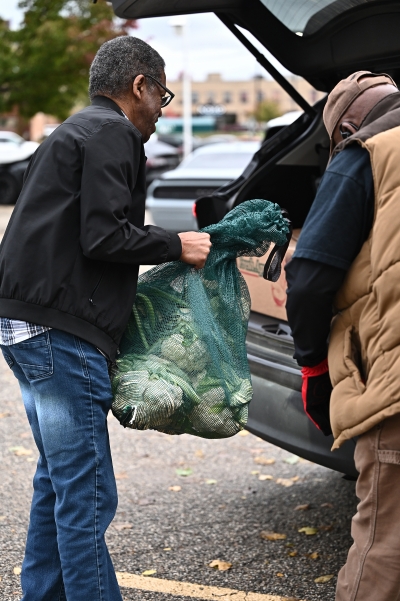
Berrien Community Foundation (BCF) leads the Southwest Michigan Food is Health Collaborative, which is a group of local partners from healthcare, hunger relief, agriculture and community organizations working together to improve access to locally grown, healthy food across the county to support health, dignity and opportunity for generations to come.
“The SNAP food benefit pause at the end of last year really underscored the need for a coordinated, local and nimble food-health ecosystem,” said BCF President Lisa Cripps-Downey. “The challenge of filling bare food pantry shelves was met with help from the community, food pantries and food distribution organizations. However, it also showed us things we can do to strengthen partnerships and build needed infrastructure. This grant is instrumental in building upon and expanding the local food systems. We are so grateful to the Michigan Health Endowment for supporting this work.”
The funding comes at a time when many households are facing higher food costs, changes in public benefits and fewer nearby options for fresh food. In Berrien County:
More than 4,500 households access one of the county’s 30+ food pantries every month.
- Over 23,000 Berrien County residents are eligible for SNAP benefits.
- Food insecurity affects 21.8% of children, 40% of Black residents and 20% of Hispanic residents.
- There are 16 federally designated food deserts where affordable, healthy food is hard to access.
While local food pantries, senior centers and meal programs continue to see higher demand for services, they also face new challenges getting food where it is needed. Higher transportation costs, fewer nearby distribution options and limited access to fresh foods make it harder for organizations to consistently offer fruits, vegetables and proteins that support good health.
“Our health is closely connected to the food that is available to us,” said Dr. Sarah Gendernalik, founder of SBG Health Strategies and strategic coordinator of the Food Is Health Collaborative. “When people don’t have consistent access to healthy food, chronic health conditions become harder to manage. By working together, we can make healthy, local food easier to find and more affordable while also supporting the farmers who grow it. When food access improves, the whole community benefits.”
This work is especially important during times of crisis, Gendernalik said. During the SNAP pause, the Nutrition Exchange of Southwest Michigan – while newly formed - was able to respond immediately and distributed more than 57,000 pounds of fresh produce, dairy and proteins and over 10,000 pounds of canned goods to over 5,000 households.
“That experience reinforced the value of working together to improve the quality and consistency of food available through hunger relief sites, not just in moments of disruption, but every day,” Gendernalik added.
How the Grant Will Support Local Efforts
While BCF is the grant recipient, all funds will be distributed to other local partners to support this work. Funding from the Michigan Health Endowment Fund will help:
- Strengthen the Nutrition Exchange of Southwest Michigan, a countywide hunger relief network co-led by Meals on Wheels of Southwest Michigan and SBG Health Strategies that coordinates partners to consistently provide nutritious, locally sourced foods and improve the food environment across hunger relief sites.
- Provide nutrition education and practical training for pantry staff, senior center teams, Meals on Wheels drivers and community health workers.
- Improve food ordering and coordination so fresh food can be delivered where and when it is needed.
- Strengthen transportation and cold storage to keep food safe and high quality.
- Expand access to SNAP and Double Up Food Bucks to help families stretch their food dollars while investing in small and mid-sized local farms and neighborhood food outlets.
- Leverage local data to guide equitable resource allocation to neighborhoods of highest need.
- Increase purchasing of local produce and proteins, helping pantries consistently offer nutritious options.
These efforts are designed to support immediate food needs while also strengthening the local food supply and supporting small and mid-sized local farms.
“Our responsibility is to build structures that hold up over time,” said Cripps-Downey. “This investment helps us do that in a way that reflects the needs and strengths of our community.”
The Michigan Health Endowment Fund works to improve the health and wellness of Michigan residents and reduce the cost of healthcare, with a special focus on children and older adults. The Michigan Health Endowment Rapid Response Fund provides short-term support to communities experiencing sudden disruptions that affect health and wellbeing including this broader statewide effort to help families and nonprofits respond to urgent food access needs while laying the groundwork for stronger local solutions. For more information visit www.mihealthfund.org.
All Rights Reserved.